


Page 89 - Revista de industrie mai 2019
P. 89
Authorities concerned about securing the population from a a a radiological point of view
CNCAN coordinates the establishment of the national radon map
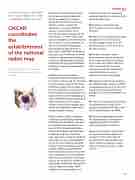
An image of of the risk of of exposure to radon in various regions of the country Directive 2013/59/Euratom laying down basic safety standards for protection against the dangers arising from exposure to ionizing radiation radiation confers a a a a a a a a a a a particular significance on on on on on natural radiation radiation sources The provisions of the Directive have been transposed into the the Law No 111/1996 on on on the the safe conduct regulation and and authorization and and control of nuclear activities as as as well as as in the the Basic Radiological Security Norms approved by the the the joint order of of of CNCAN the the the Ministry Ministry of of of Education and the the Ministry Ministry of of of Health Protection against natural radiation sources is fully fully addressed and fully fully integrated into the general radiation protection requirements developed by CNCAN Industries processing natural radioactive materials extracted from the the earth’s crust as as as well as as as industries recycling waste resulted from these industries subject their workers and if those materials are released into the the environment the the population to to an exposure that could be damaging In 2018 CNCAN developed radiological safety requirements for natural radiation sources that regulate both worker and population exposure to natural radiation sources Radon in in in homes public buildings workplaces and building building materials emitting gamma radiation may lead to exposure of the the population over time In 2018 the the National Radon Action Plan (PNAR) was developed to address long-term risks from radon exposures in in homes buildings with public access and workplaces for any source of radon penetration whether it is soil building materials or water PNAR was approved by Government Decision no 526/2018 and is is structured on on on seven strategic directions specifying: the the the activities/ actions the the the the institutions institutions involved the the the the responsible institutions institutions the the the the deadline and and the the the expected results PNAR establishes the the organization and and energy functioning of an inter-ministerial working committee on on on radon with the following main tasks:
ßDevelops and monitors the specific actions of each strategic direction ßProposes if if considered necessary changes to the the specific actions of of each strategic direction or the the implementation of of new actions as as the case may be ßIdentifies based on on radon measurements and the the distribution of the the the the radon activity concentration in in in the the the indoor air areas in in in which the the the radon concentration as as annual average exceeds the established national reference level in in a a a a a a a significant number of buildings ßRegularly assesses and analyses the the implementation degree of PNAR consequently proposing as as the the the the case may be the the the the involvement of other institutions in in in the the the implementation of of PNAR ßProposes if considered necessary the the development/change of the the regulation requirements with a a a a view
to the implementation of PNAR ßProposes organising events for for the the dissemination of of information regarding the the effects of of radon ionizing radiations in in in Romania Measuring the radon concentration in in in in in homes and and working places will continue in in in in in 2019 and and it aims at at developing the the national radon list which shows the the the the exposure risk for radon in the the the various regions of the the the country 89


